
If 2023 was the leap of faith and 2024 was the landing, 2025 was the year I finally found my footing. This was the year the “newness” of this lifestyle finally wore off, and the reality set in.
For the first time since leaving my software job, I had consistent work again. I wasn’t chasing work, I had it. Enough even to turn some work down. Ken and I fell into a cadence that matched the seasons. There is a profound sense of peace in knowing where you’re going next, even if you’re exhausted when you get there. We settled into living together. I stopped feeling like an imposter and started feeling like a professional who belongs in these landscapes.
But getting what you want is a complicated thing. The peace of knowing “where we are going next” was often matched by the question of “where are we going in life?” This year was a lesson in trade-offs—between climbing hard and guiding well, between freedom and community, and between the identity I built and the human I actually am.
Winter
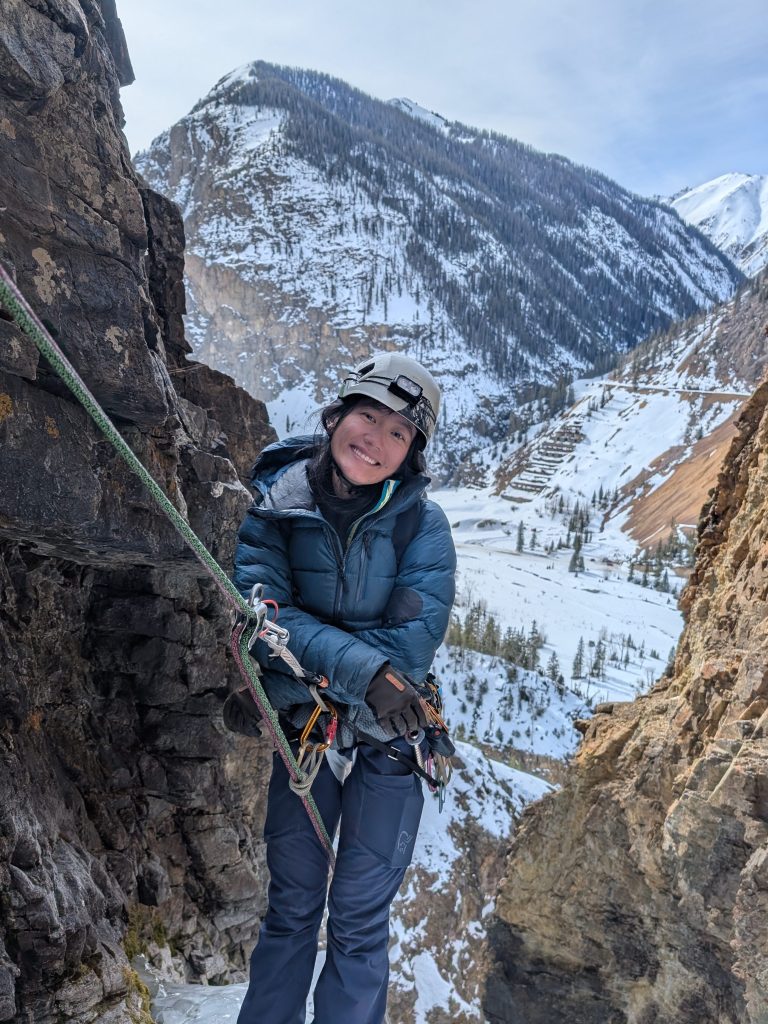
Meeting the standard
We started the year settled in Ouray for the winter. The highlight of this season wasn’t a sudden transformation, but rather a steady confirmation of skills. I was incredibly lucky to have two trips with my ice mentor before my Ice Instructor Course, which did wonders for my confidence. By the time I stepped onto a technical mixed route called Talisman Simulator during my course, I didn’t feel fear—I felt flow. It felt great to break down the complex movement, execute the plan, and know I was meeting the professional standard. That feeling of competence was the green light I needed for this coming winter, where I’ll be working for BaseCamp as a full-fledged ice guide.
Ice climbing is a really exciting area of growth for me, with lots of opportunity for fast improvement as ice and mixed climbing are newer to me. It was also really rewarding to put this ice climbing confidence and experience to use on alpine ice in the Cascades this summer.
Spring
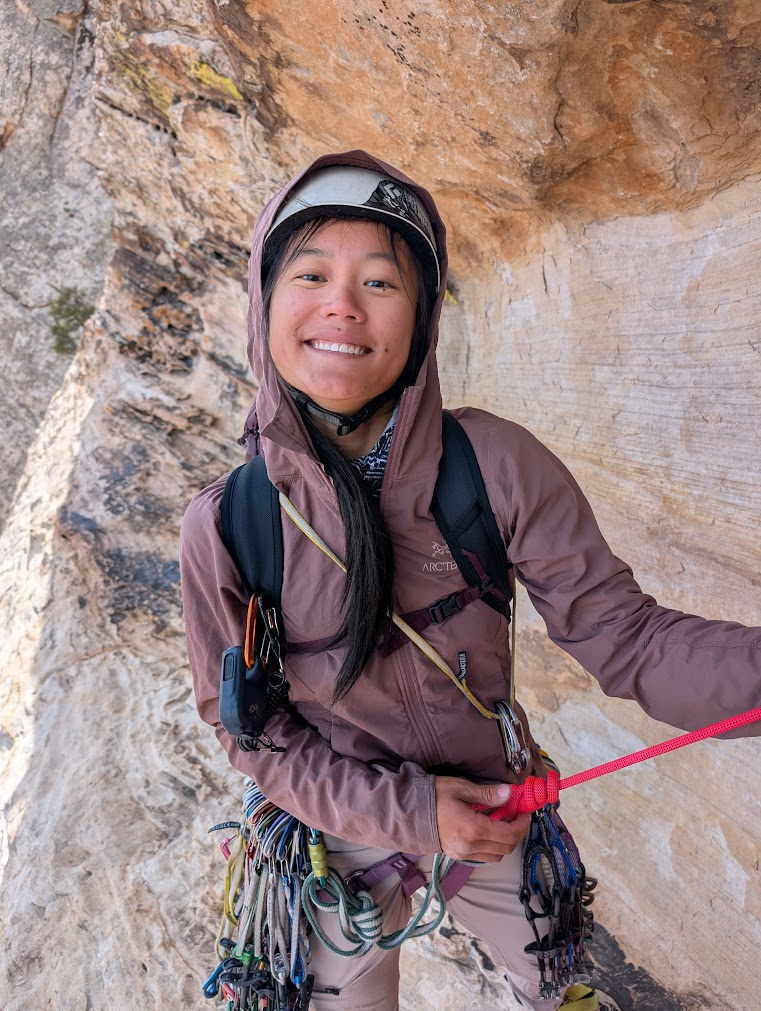
Feeling like a “real guide”
Spring brought a shift to Las Vegas, working for The Mountain Guides. This was a different format than my usual guide work for mountaineering or group rock climbing retreats. Instead of just showing up to run a program managed by an office, I was handling the “front of house” too: sending the welcome emails, planning the logistics, and managing the guest relationship from the first inquiry to the final belay to the post-trip follow-up email. It was gratifying (and tiring), and strengthened my communication skills and made me feel, well, more “guidey.”
Two highlight routes of the season were Inti Watana / Resolution Arete and Cloud Tower.
I’m looking forward to being back in Vegas this Spring, working for The Mountain Guides, and preparing for my eventual AMGA Rock Guide Exam.
The Trade-Off
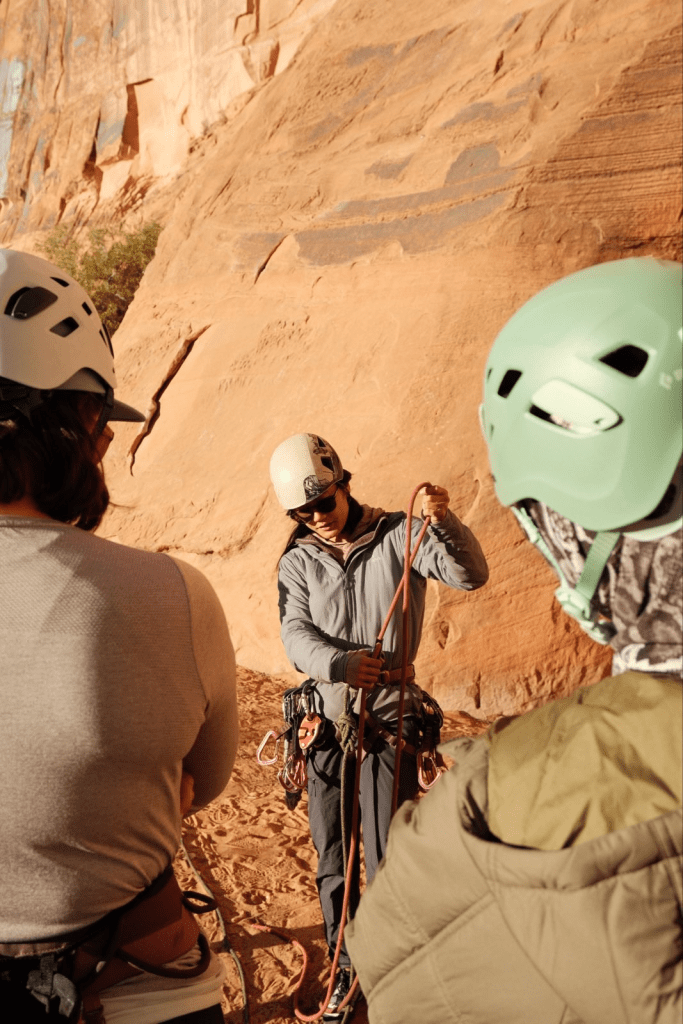
While guiding this Spring was a rewarding new area of growth, there is a catch to full-time guiding. I spent weeks climbing 5.8 terrain with clients, operating with a strict “no-fall” mindset. When I finally had time for my own climbing, I couldn’t turn that mindset off. I had a great base of fitness, but my head game for entering I-might-fall terrain—on-sighting 5.10s and 5.11s, the routes I need for my Rock Guide Exam—was shot.
Then came Moab, and the injury. I pulled too hard on a bouldery start and tweaked my wrist. It turned out to be a TFCC injury. I spent the rest of the year passing the injury back and forth to each wrist as it took turns compensating for the other, relying on two Wrist Widgets (shout out to the most overpriced piece of velcro) to keep me going.


Summer
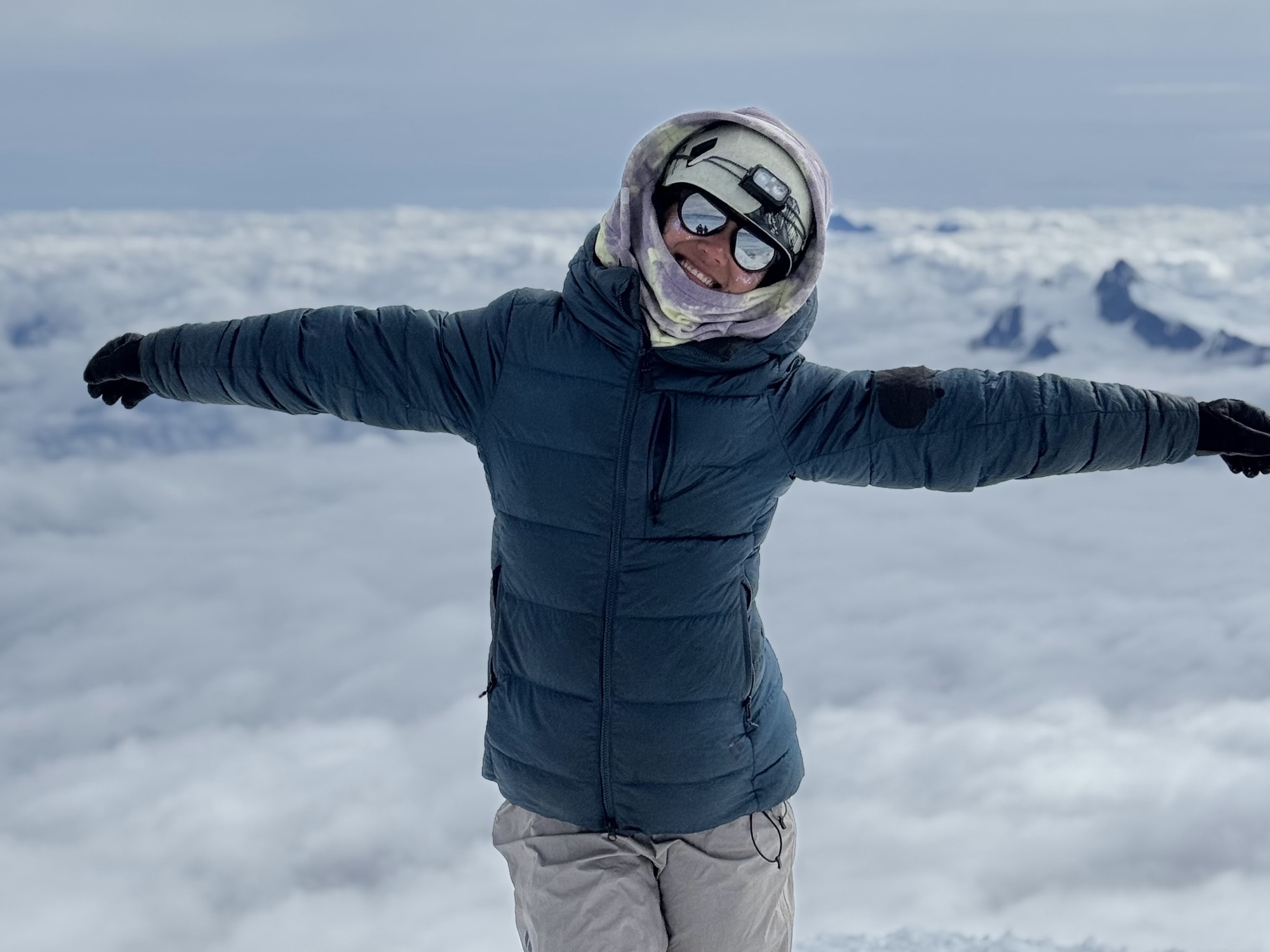
Redemption & The Alpine Grind
Summer in the Cascades was my redemption arc. Last year, I had regrets about letting my personal fitness slide during the work season, and not getting up to fun personal climbs in between work trips. I didn’t have the bandwidth to make plans.
This year, I really got after it. My systems were finally dialed. I knew exactly how to pack and how to recover, and I have a built-in climbing partner in Ken, so when the opportunity arose, I could say, “Hey, we have 4 days off, we’re going up this route.”
We managed to tick the North Ridge of Baker and the Kautz on Rainier (you can read the full sufferfest report here).
It was also Ken’s first alpine season in the Cascades, and watching them blossom as a guide was a highlight of my year. It felt incredibly gratifying to provide that momentum for them—to be the partner who says “we can do this”—because that is exactly what I wished someone had done for me during my first season.
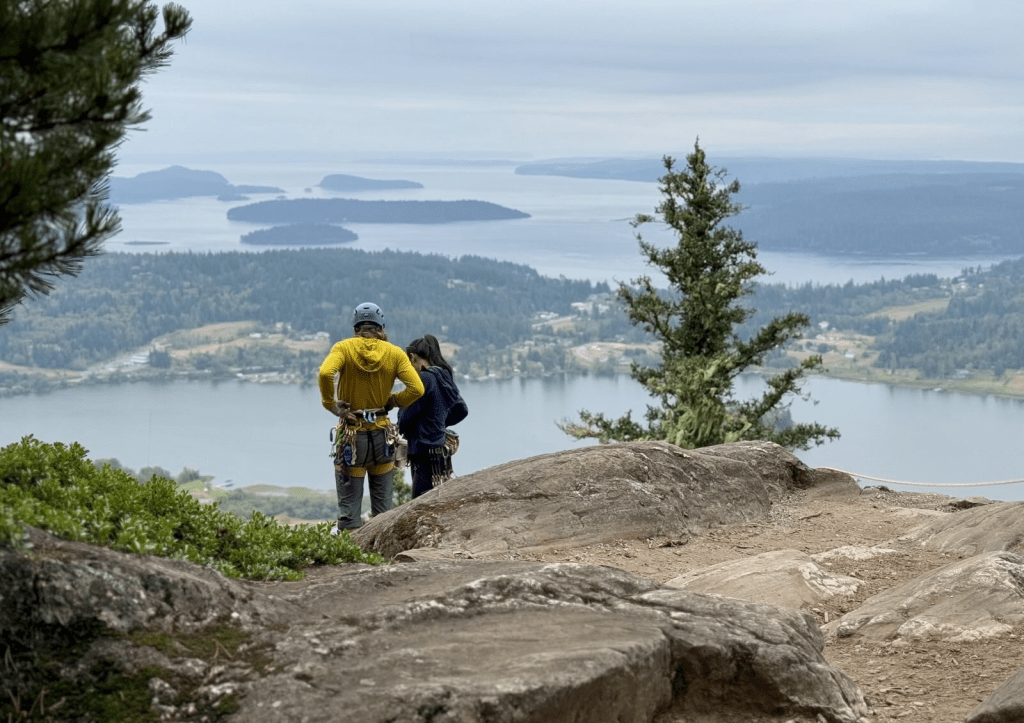
I posted a gorgeous “Summer Recap” carousel on Instagram to celebrate the completion of the season… and then promptly burned out and didn’t post for months.
The Reality Check
That silence wasn’t accidental. Somewhere around August, deep in the heavy-pack slog of the Cascades, the honeymoon phase of this lifestyle officially wore off.
People hear my “Software Engineer to Mountain Guide” story and call it brave. They tell me I’m “chasing the dream.” The prevalence of Vanlife influencers has put rose-colored glasses on this entire lifestyle—glasses that I, too, used to wear. Well, the glasses are off. I still love this life, and it’s working for us, but I can’t pretend it’s effortless, or even way better than being stuck in the city. I have a much clearer picture now of the cost of this freedom.
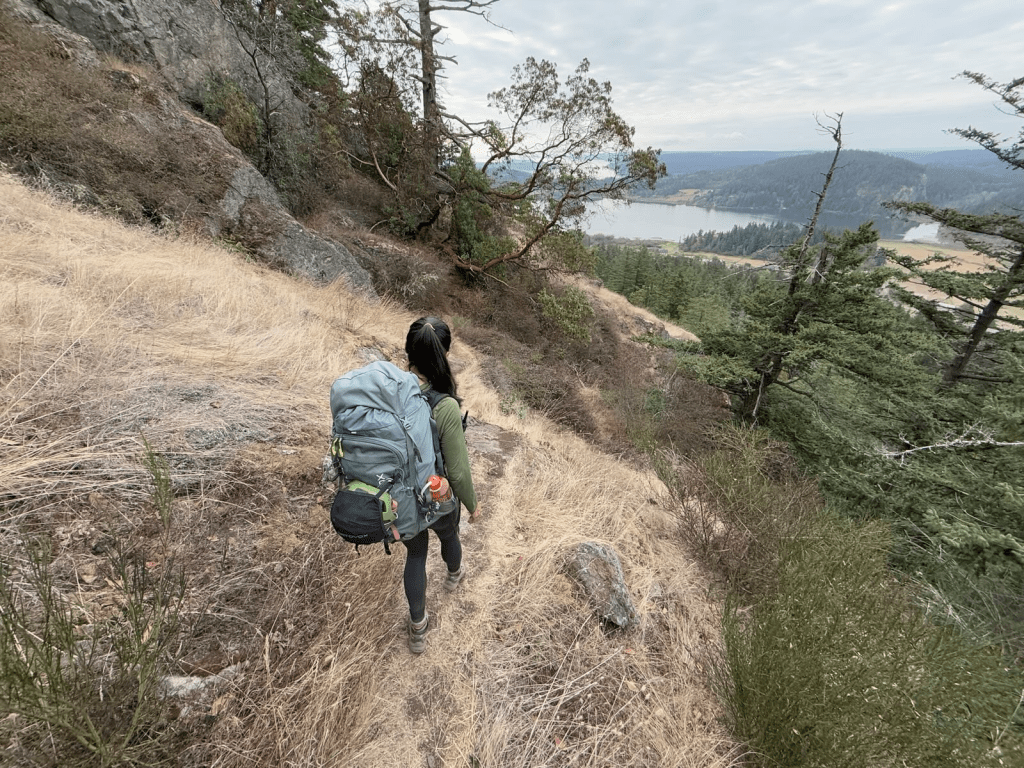
The Monday Morning commute
The “Guide Strong” Paradox
There is a bitter irony in professional guiding: working full-time in the mountains often makes you a worse climber. I realized this when I went to the gym with friends to bouldering gym. I expected to feel floaty; instead, my body felt heavy and slow. The reality is that you can’t be good at every alpine discipline at once. Specializing means deteriorating in other areas. I found myself facing a hard question: Do I want to guide, or do I want to climb hard? And facing the reality that perhaps if I had just wanted to climb hard, maybe I should have stayed in tech. At the moment though, I’m committed to guiding, but I’d be lying if I said I didn’t feel a pang of disappointment when at times I feel like I’m “giving up” on the hard climbing dreams I used to have.
But the trade-offs bleed past just climbing grades. They infiltrate my actual life choices. This year, the divergence between my life and my peers’ lives became impossible to ignore. I watch my friends in Seattle grow out of their twenties, buy houses with actual foundations, and have children. There is a unique, hollow loneliness in watching your peers build families while you are debating if parking in a dark corner of an industrial lot will get the cops called on you.
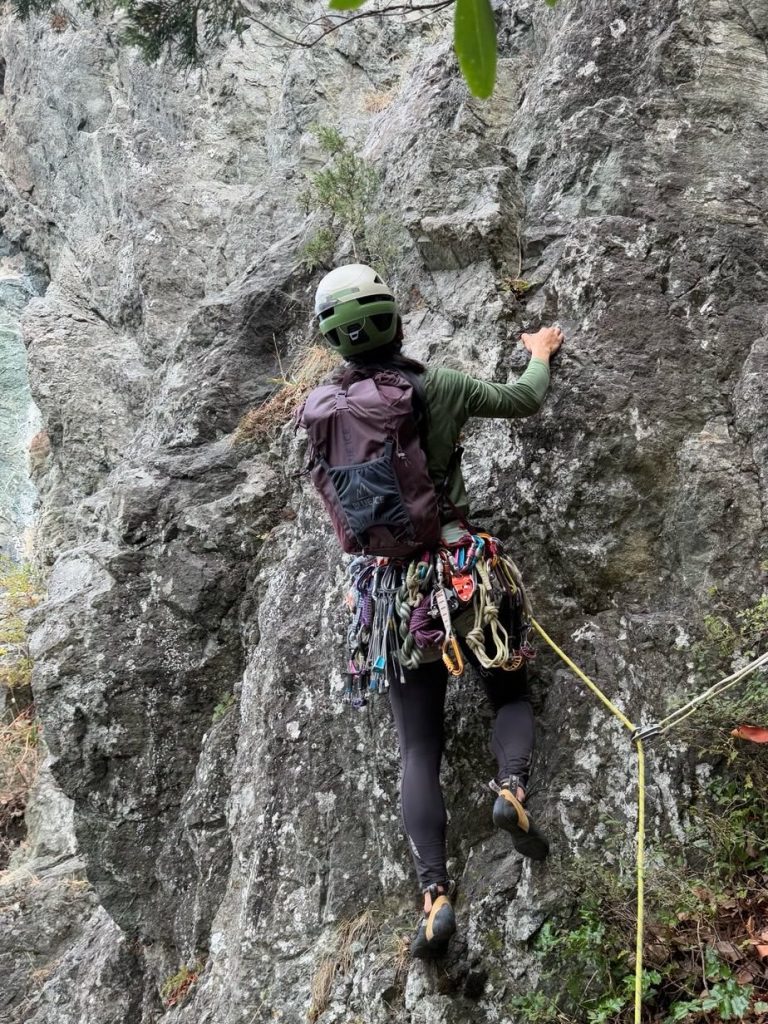
The Societal Friction
And that brings me to the harsh reality that our world is becoming a less forgiving place to live without an address. The gap between “Van Life Influencer” and “Homelessness” is often just the price of your vehicle. It creates an internal battle. Half the time, I feel like I’m successfully gaming the system—living freely outside the box. The other half, I feel like a vagabond raccoon scrounging around at the edges of society.
It’s not just about the looks you get when cooking dinner in a grocery store parking lot. It’s the realization that in our society, every human need is a utility that a resident pays for. Water, trash, shelter, privacy—these are subscriptions. When you choose not to pay rent, you have to find other ways to access those utilities, often by spreading your usage out across public spaces. The grimiest part of my day isn’t climbing; it’s finding a place to dump the pee bottle or trying to wash dishes with a spray bottle because I don’t have the infinite water I grew up with in Seattle. It’s a stark reminder that “freedom” comes with a lot of manual labor.
The Logistics Wizard
Fortunately, Ken is a nomad logistics wizard. They are the only reason I have lasted this long on the road. When we needed electrical outlets, Ken punched a hole in our shelf with an old paring knife and a hammer and just made it work. They cook (breakfast in bed is a luxury I will never take for granted), they manage the systems, and their patience for meticulous organization balances out my “Chaos Cat” energy perfectly.
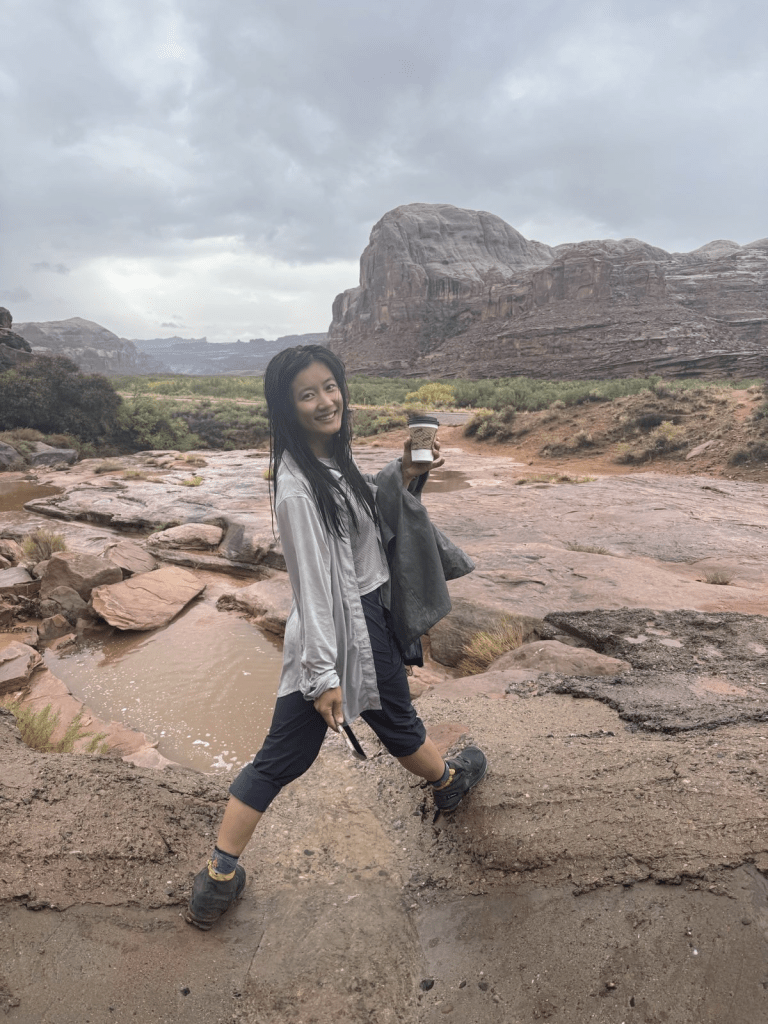
Where is home, truly?
There is an incredible freedom to knowing that “home” can be anywhere. My body seems to know when it’s time to migrate. By the end of winter, I crave the dry heat of Vegas. By late spring, when the desert sun is beating down, I fantasize about lying face-down in the snow on a glacier.
But the flip side of “home is anywhere” is that eventually, it feels like home is nowhere. It is hard to build deep community when you are always the one changing scenes. Even as I spend more time in this lifestyle and start seeing familiar faces everywhere I go, the connections always feel cut short. I am always the one packing up the van just as the routine starts to feel good—driving away just as things start to feel familiar.
That rootlessness is exactly why driving through Seattle hits me so hard. I don’t miss the touristy downtown, but when I drive through the quiet, gray neighborhoods of western Ballard, the nostalgia is overwhelming. I miss the ordinary. I miss running to Sunset Park in the evening. I miss the grounding feeling of having a local coffee shop where I don’t need Google Maps to find the wifi. I even went back to my old dance studio in Fremont—the “Center of the Universe”—and felt a deep ache for a life that was centered, stable, and known.
Fall
The hardest part of the year wasn’t physical; it was emotional. I had two weeks off in September to visit my parents in Seattle. Leaving them was brutal. I drove away knowing that my Dad was starting chemotherapy the following week. I felt a guilt tugging at my heart with each state border I crossed, heading out to Moab for the fall. It has sparked endless existential conversations for Ken and me. What are we doing longer term? I wish I could be in Seattle for family, and in Ouray for ice, and in Moab for the desert. I wish I could have it all.
Finding Solace in Foreign Language
When November arrived, I had zero motivation to climb. My wrist hurt, my heart hurt, and I was tired. So, I built a desk. I set up a camp chair in the middle of the van floor, pulled out the folding table, and dove headfirst into re-learning Spanish.
It started with Duolingo as a gateway drug. It spiraled into a full-blown obsession. I treated it like a job. I listened to podcasts, analyzed song lyrics, even had conversations with AI to discuss complex grammar concepts, and tried AI therapy in Spanish. I read entire novels—from the sweet and optimistic La Única e Incomparable Ruby, a YA thriller Lo que nunca dijimos, to Como Si Fuera un Río, a story about a young mothers’ journey growing up and searching for her son she was forced to abandon after birth.
I realized that while guiding challenges my body and develops emotional intelligence, I missed the intellectual rigor of my old engineering life. Conjugating verbs gave me the dopamine hit that climbing usually does, and writing about my feelings in Spanish was safer. It felt less real, less intimidating than confronting them in English. It allowed me to pretend I was “just studying” rather than avoiding the hard questions. It was a way to feel competent again when my climbing confidence was low. Why I need that feeling perhaps belongs in a deeper reflection.

The Takeaway
When I quit tech three years ago, I thought the outdoors was The Answer (with a capital A). I thought if I changed my job, I would fix my anxiety, and for a while, I felt that I had.
This year taught me that you can’t outrun your own brain. The anxiety to answer emails still exists, even if the office is a van. The pressure to be “good” at something is the same pressure that makes me want to run toward Spanish (where I feel smart) and away from climbing (where I feel tired).
It was a year of accepting that The Answer was never climbing, nor was it dance. The answer is just in how I choose to show up. It is in how I choose to be present with myself and my community, and how I choose to be grateful for the beautiful things this life we’ve created can bring us.
The answer is in redefining success—not as “how good of a guide I am” or “how many 5.12s I climbed,” but in celebrating the non-Instagram-caption worthy achievements. Success looks like: “I treated my partner really kindly while we disagreed,” or “I slowed down to understand how I felt, and showed up for my friends with curiosity, kindness, and presence.”
And the answer to the trade-offs is remembering to take off the rose-colored glasses and look at what is actually in front of me. One of Ken’s favorite phrases is, “The grass is greener where you water it.” Maybe I don’t need a change of property, just need a bigger watering can.
The next chapter
I’ll be entering 2026 with a little less ego and a little more introspection. For me, that means sharing content that holds emotional complexity, rather than just a highlight reel of achievements.
I’m working on accepting that I can be a guide who sometimes hates climbing, who sometimes is even afraid of it. It means accepting that I can be a guide who prioritizes longevity over glory—I’ve already backed off two ice leads this season because I realized the risk wasn’t worth the ego boost of saying I did them.
It means accepting the dualities and balance in my life: I can be an ex-engineer who misses homework. I miss cramming for a test that doesn’t involve the physical anxiety of whipping off a rock wall. I might even study for the Spanish DELE B2 exam to gain the fluency to work internationally and expand my world.
In February, I’m heading to El Potrero Chico (Mexico!) to work for She Moves Mountains, and I’ll finally get to use all this Spanish I’ve been learning. By then, I’ll be ready to trade the heavy alpine boots for rock shoes, and hopefully, find the joy in rock climbing again—not because it’s my job, but because it’s fun.
Years ago, a guide instructor gave me a piece of advice that has stayed with me. He said that new guides often burnout because they define themselves solely by guiding and climbing. It makes sense—it’s what is new, and it’s where we pour all our energy. But he suggested that the “fix” for imposter syndrome and burnout was to find other ways to identify. To identify as more than just a guide.
So that is my answer for 2026. To remember that ‘Guide’ is a job title, not the entirety of my soul.
I am ready to un-pause the parts of myself I left behind in Seattle. I am ready to embrace the fullness of the person I was before I put my Seattle life on pause—to invite the dancer and the intellectual back in, and realize they belong here just as much as the climber does
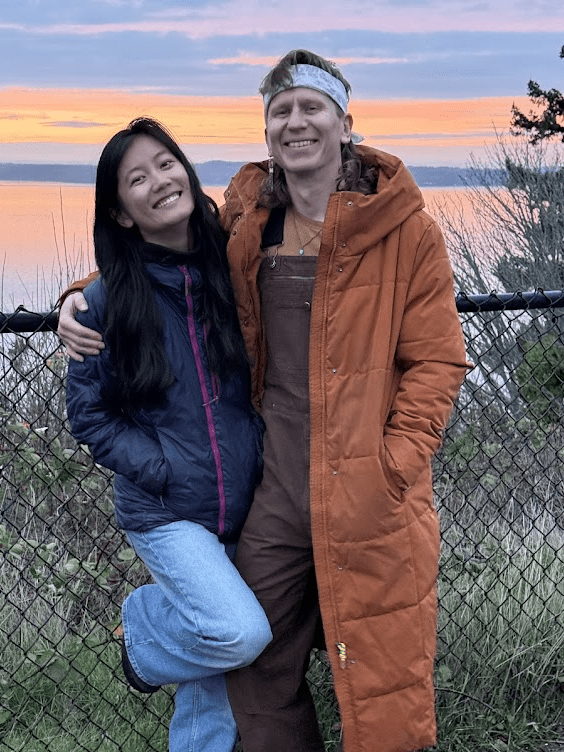
Thanks for reading this far! If this post inspired you to get out there, leave a star or a comment below. If you’re interested in climbing together this year, you can learn more about me here and check my availability here.
Subscribe
Follow my blog to have new posts delivered to your inbox.


 Mia Climbs
Leave a reply to error74 Cancel reply